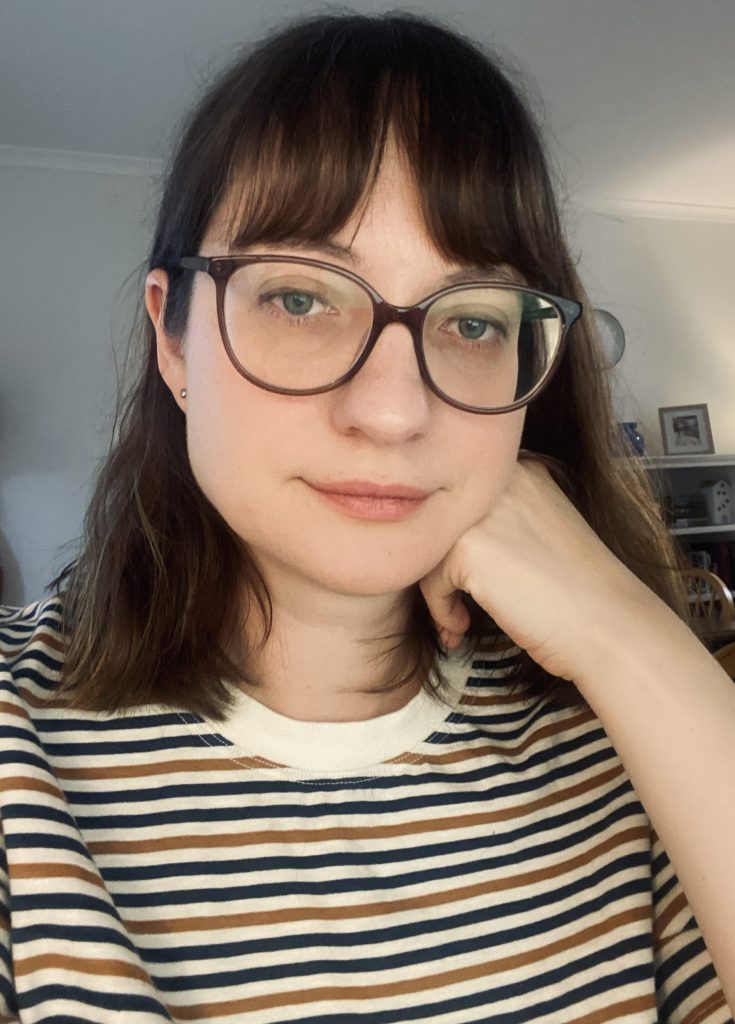
About
Isabella G. Mead is a poet from Naarm/Melbourne. Her debut poetry collection, The Infant Vine, was published by University of Western Australia Publishing in 2024. The book was a finalist in the 2025 Judith Wright Calanthe Award for a Poetry Collection and commended in the Five Islands Prize for a first book of poetry. Her work has also appeared in Meanjin, Island, Griffith Review, Rabbit, Westerly, Best of Australian Poems, Cordite Poetry Review, Anthropocene, The Marrow, Going Down Swinging, Pamenar Press, and Plumwood Mountain Journal.
Isabella is a PhD Candidate in Creative Writing at Monash University.
You can listen to an interview with Isabella on 3CR here. You can read interviews online here and in HOWL Magazine.
Isabella also reads a selection of her poems on the ‘Eat the Storms’ poetry podcast (episode 9, season 12) and her shortlisted poem for South Coast Writers Centre here.
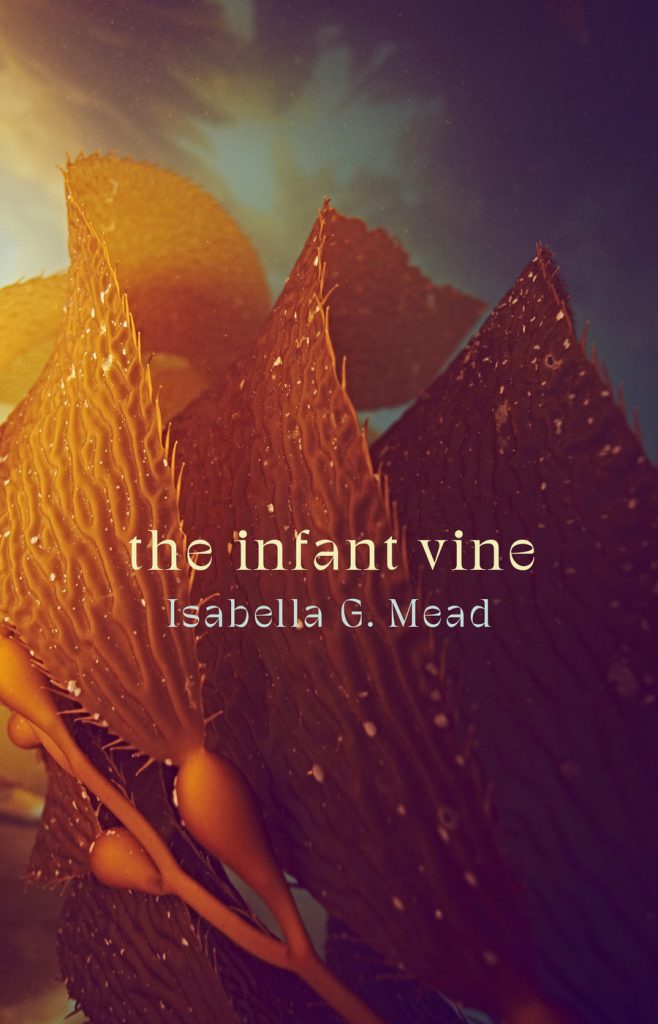
The Infant Vine (2024)
Published by University of Western Australia Publishing
Lyrical and narrative-driven with playful and fantastical elements woven throughout, the poems in The Infant Vine reflect on how ordinary moments become charged with significance and strangeness when disaster strikes. Such moments make imaginary worlds possible: sleep deprivation transfigures a new mother into a leafy seadragon; a novel virus gives women the power to reproduce via parthenogenesis like the eponymous bonnethead shark.
Themes of transformation, metamorphosis and preservation—of life, of memory and the environment—permeate Isabella G. Mead’s debut collection. This is a rich and compelling exploration on caregiving and creativity in the context of global crises.
“Isabella G. Mead’s The Infant Vine abounds with unsettling encounters within and beyond the body’s boundaries. The collection grapples with experiences of transformation and (re)birth: child-bearing and raising, climate disaster and seasonal change, and the capacity of visual art to revivify the familiar world. Abundance and devastation coexist, and ‘the direction never changes: / begin again.’”
— Judges’ comments, Queensland Literary Awards
Reviews of The Infant Vine
You can read reviews of The Infant Vine in Books+Publishing, ArtsHub, Compulsive Reader, Science Fiction & Fantasy Poetry Society and Eureka Street.
The Infant Vine is also discussed in ‘The Singing Flower is Crying: Poesies of Early Parenthood’ by Jo Langdon, published in the Sydney Review of Books.
Recent publications
The Scar
Published in Best of Australian Poems 2025
On Patience
Published in The Marrow, Issue 5, August 2025
You Will Be Seen Now
Published in Griffith Review 88: Culture Vultures, 2025
Ahead of Tropical Cyclone Alfred, e-scooters trap a car
Published in Island (online), April 2026